
Precision turning parts
Turned components, made to your drawing
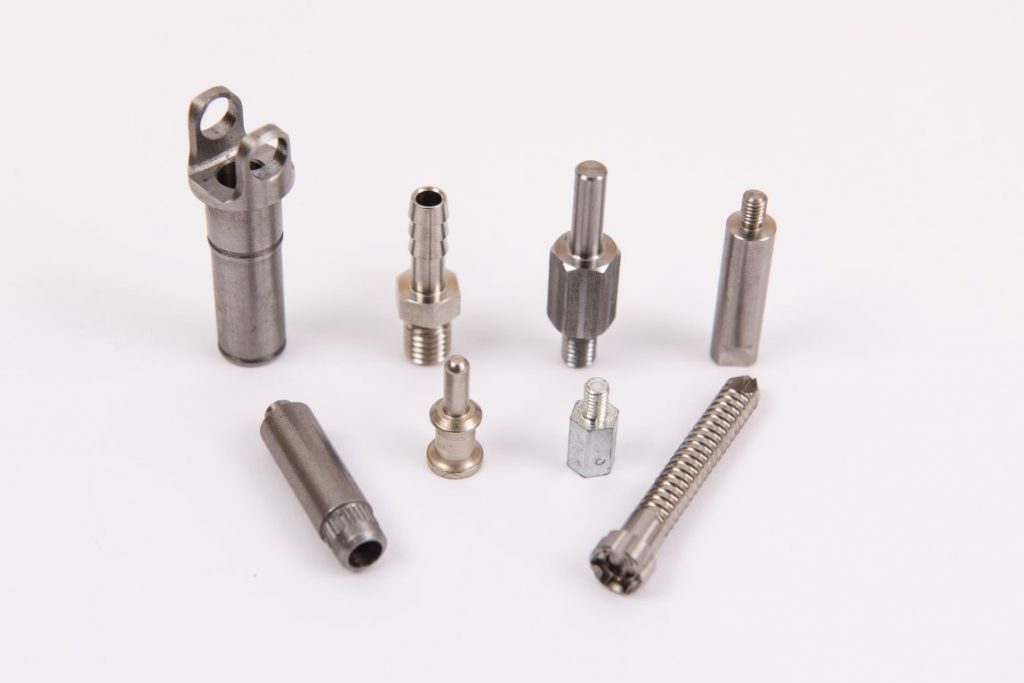
Every part on this page was manufactured to a customer specification. We do not sell a catalogue — this is a map of the component types our machines are set up for, so you can tell at a glance whether your part belongs here.
Capability summary
- Diameter range
- Ø 2 mm – Ø 52 mm standard (full machine envelope Ø 1–65 mm)
- Part length
- 0.5 mm – 600 mm, depending on process
- Lot sizes
- 5,000 – 5,000,000 pieces
- Blank form
- Bar stock and castings
- Processes
- Swiss turning, automatic bar turning, turret turning, full-range turning with milling, hard turning, rotary transfer, cross drilling, thread cutting
- Materials
- Stainless steel V2A/V4A, carbon, tool and spring steel, hardened steel, brass, copper, zinc alloys, aluminium, titanium, nickel alloys, thermoplastics
- Surface treatment
- Zinc, zinc-nickel, nickel, tin, copper, phosphating; hardening, nitriding, carburising; grinding
- Cleanliness
- Ultrasonic degreasing and washing before dispatch
- Inspection
- CMM, optical non-contact, SPC, 100% camera sorting
- Delivery area
- Worldwide
Component types
Parts we make every week
The categories below cover the great majority of what leaves our plant. If your part resembles one of them, it will almost certainly run well on our machines.
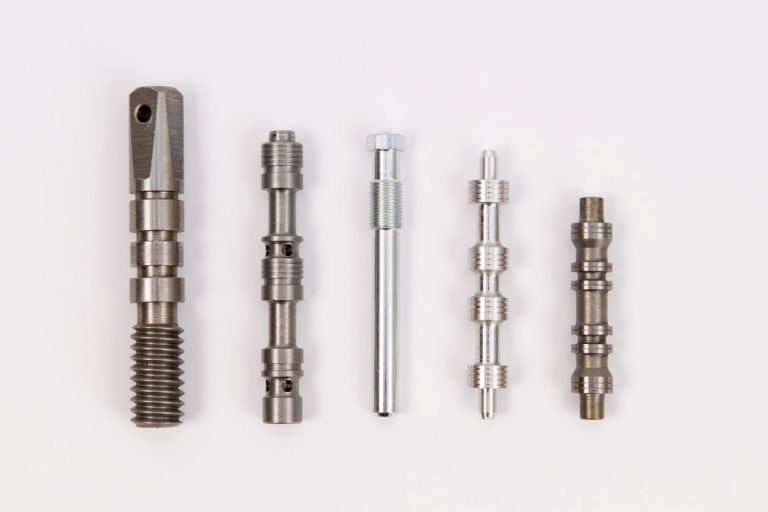
Shafts & pivot pins
Long, slender components where straightness and concentricity over length decide whether the assembly works. This is the natural territory of sliding head turning — the bar is supported millimetres from the cutting edge, so deflection stays under control even at high length-to-diameter ratios. Typically machined in case-hardening or heat-treatable steel and hardened afterwards.
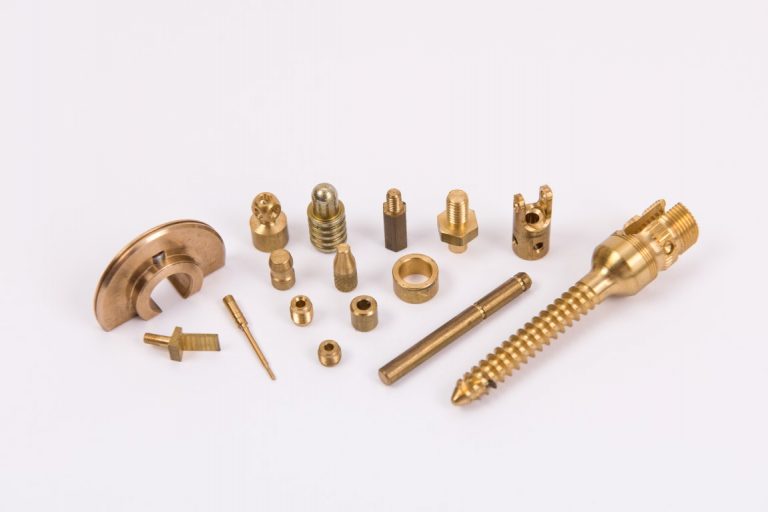
Bushings & sleeves
Parts defined by their bore: wall thickness, roundness and surface finish inside the bore matter more than the outside diameter. Where the bore tolerance is tight, hard turning after heat treatment replaces internal grinding and removes a process step from the chain.

Connectors & fittings
Hydraulic and pneumatic connectors combine external threads, sealing faces and cross drillings in one part. They are usually machined in brass or free-cutting stainless steel, and the sealing surface — not the thread — is what a leak test will find.
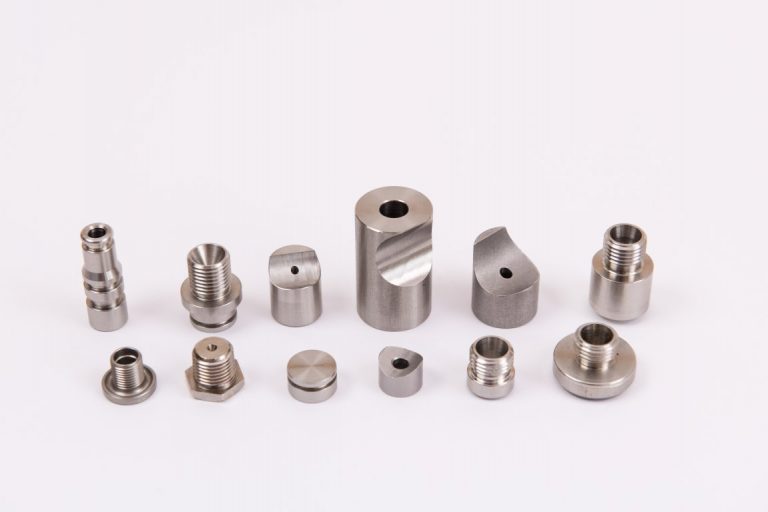
Sensor housings
Automotive sensor housings carry tight form and position tolerances on features that locate a sensing element, plus a sealing interface and often an external thread. These parts almost always come with 100% inspection and full PPAP documentation.
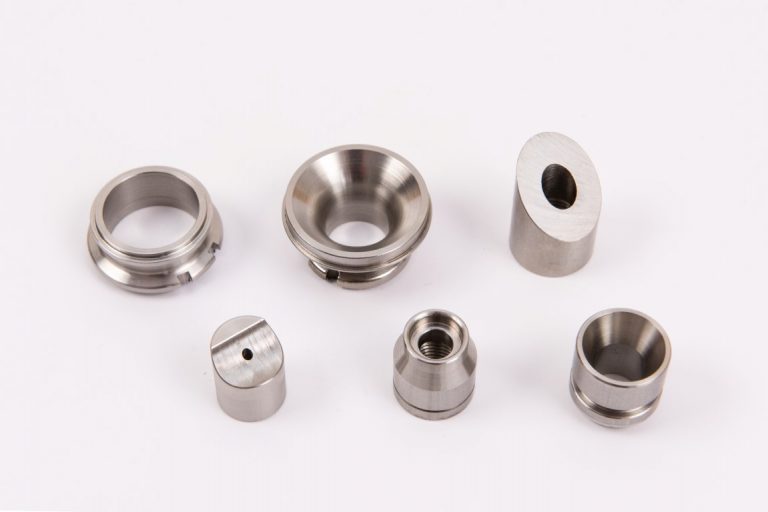
Screws, bolts, nuts & washers
Machined rather than cold-formed fasteners, for cases where the geometry is non-standard, the volume does not justify forming tooling, or the material is difficult to form. Usually plated, and usually delivered in very large batches.

Housings & covers
Larger diameter parts machined from bar or from castings on turret centres, with driven-tool milling for flats, pockets and mounting holes. Frequently in aluminium where weight or thermal conductivity is the driver.
Material selection
Choosing the right metal for a turned part
Material is the single biggest lever on the price of a machined component — not through its purchase cost, but through tool life and cycle time.
| Material group | Strengths | Watch out for |
|---|---|---|
| Free-cutting brass | Excellent machinability, long tool life, fast cycles, good for fittings and contacts | Cost per kilogram; limited strength |
| Free-cutting carbon steel | Low material cost, stable machining, ideal for high volumes | Requires plating for corrosion protection |
| ETG free-cutting steel | High strength without post-machining heat treatment; no distortion | Higher material cost than plain carbon steel |
| Case-hardening steel | Hard wear surface with a tough core; ideal for pins and shafts | Heat treatment adds a process step and possible distortion |
| Austenitic stainless (e.g. 1.4305) | Corrosion resistance without plating; food and medical adjacent use | Work hardening, shorter tool life, slower cycles |
| Martensitic stainless | Hardenable and corrosion resistant; good for wear parts | Demanding to machine in the hardened condition |
| Aluminium | Light, thermally conductive, fast to machine | Soft — thread and bearing surfaces may need inserts or anodising |
| Copper and copper alloys | Highest electrical and thermal conductivity | Gummy in cutting; material cost |
| Titanium alloys | Outstanding strength-to-weight and corrosion resistance | Slow cycles, high tool wear, high material cost |
| Nickel alloys (Inconel, Monel, Hastelloy) | Hold strength at high temperature; resist aggressive media | The most demanding group to machine — reserve for parts that need it |
| Thermoplastics | Electrical insulation, low friction, very light | Thermal expansion; tolerances behave differently from metal |
Tell us the function rather than only the grade. More than once we have halved a cycle time by proposing a different material that met the same requirement.
Getting a quotation
What we need to price your part
- 2D drawing in PDF with tolerances and surface finish requirements
- 3D model in STEP format, if you have one
- Material specification, including any customer standard
- Surface treatment or hardness requirement
- Annual quantity and expected call-off pattern
- Documentation level required (PPAP, IMDS, certificate of conformity)
- Packaging and labelling requirements
