
Product development
A development supplier, not just a machine shop
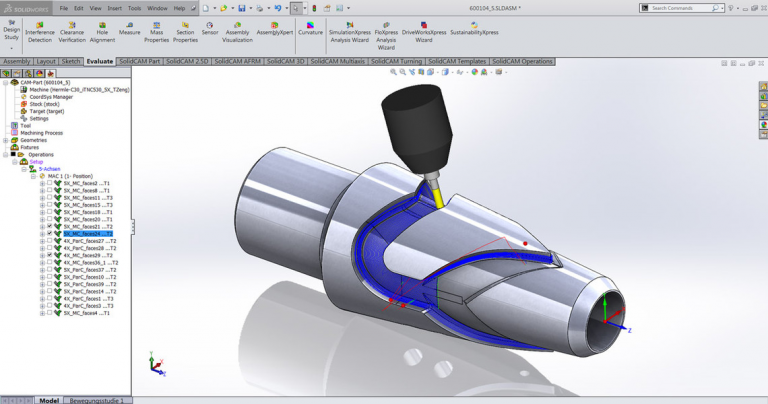
New products are developed in close cooperation with our customers. Starting from your basic specification, we shape the geometry around the machining process so you get the best combination of function, quality and price.
How we work
Design for manufacture, decided early
Most of a machined component's cost is fixed in the first week of its design. A radius that a tool cannot reach, a tolerance that forces a second setup, a material that halves tool life — these decisions are cheap to change on a drawing and expensive to change in production.
We are recognised by our customers as a development supplier. Products are developed according to the customer specification, and through that cooperative approach we can offer components with the most suitable characteristics at an optimal price.
To shorten the route from idea to product, we use concurrent engineering and manage projects according to the requirements of IATF 16949. Tooling, fixturing, gauging and process documentation are developed in parallel rather than in sequence.
The route to series
From specification to approved series part
Feasibility & quotation
We review the drawing against our process capability, flag anything that will drive cost or risk, and quote against a defined annual volume.
Process design
Machine selection, tooling concept, fixturing and the machining sequence are defined, together with the control plan and the gauges needed to verify it.
FMEA & control plan
Process FMEA identifies what can go wrong and what will detect it. The control plan fixes the frequency and method of every check.
Samples & capability
First samples are machined on the production equipment. Machine and process capability studies prove the process is stable, not merely correct once.
PPAP & IMDS
Full PPAP documentation up to level 5 is prepared when required, together with IMDS material data entries for automotive customers.
Series & improvement
Once approved, the part enters series production with SPC monitoring and continuous improvement across cycle time, tool life and scrap rate.
What we need from you
Give us the intent, not only the drawing
The more we know about how the part is used, the more we can help. A tolerance that exists because of a bearing fit is untouchable; one that exists because it was copied from an older drawing usually is not.
- 2D drawing (PDF) and, if available, a 3D model in STEP format
- Material specification and any customer standard that applies
- Surface treatment or hardness requirement
- Annual volume and expected call-off pattern
- The function of the part and its critical characteristics
- Required documentation level (PPAP, IMDS, certificate of conformity)